

Plant material: The plant material used in this study consisted of N. biserrata plants and soil collected from an undisturbed site located in the village of Abbè- Bégninou, in the municipality of Azaguié, southern Côte d’Ivoire. This site, located between longitudes 5°30′W and 5°50′W and latitudes 3°55′N and 4°10′N, is about 40 km from Abidjan. It is characterized by low anthropogenic pressure, ensuring the ecological quality and low initial contamination of the plants and soil sampled (fig. 1).
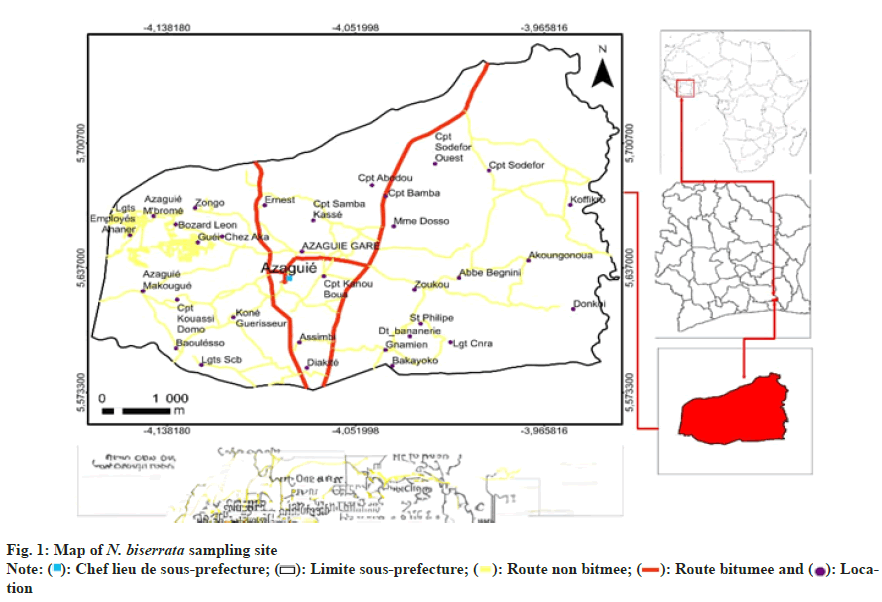
Fig. 1: Map of N. biserrata sampling site
Note: ( ): Chef lieu de sous-prefecture; (
 ): Limite sous-prefecture; (
 ): Route non bitmee; (
 ): Route bitumee and (
 ): Location
The fern N. biserrata, widely distributed in tropical wetlands, was selected for its recognized phytoremediation qualities, including rapid growth, robustness, and adaptability to diverse environments. Young plants were carefully uprooted, washed with distilled water to remove soil residues, and transferred to the laboratory for experiments. In parallel, soil samples were manually collected in polypropylene bags. These samples were air-dried for 5 d, then sieved and freed of organic debris before use in controlled culture experiments.
Experimentation
Plant cultivation: The experiment was conducted under semi-controlled conditions, sheltered from rain, in a greenhouse designed to simulate a tropical environment. The experimental setup consisted of cultivation in 5 l pots (height: 12 cm), each containing 1 kg of soil, arranged in triplicate for each treatment. The soil, collected in Azaguié (Côte d’Ivoire), was artificially contaminated using standard solutions of heavy metals (Zn, Cu, Cr, and As) at increasing concentrations of 20, 50, 100, and 200 mg/kg. Contamination was carried out before potting to ensure optimal homogeneity of the metal load in the substrates.
Young N. biserrata plants, collected from the undisturbed site in Abbè-Bégninou (Azaguié), were transplanted into the pots containing the different treatments. After transplantation, the plants were grown for 8 w, during which regular observations of their growth were made.
The cultivation conditions were rigorously controlled throughout the experiment. Uniform watering with distilled water was carried out, thus avoiding any external contamination. This protocol made it possible to standardize growth conditions, ensuring the reliability and reproducibility of results related to heavy metal bioaccumulation.
Soil physicochemical characterization:
The soil sample used in this study was analysed according to standardized protocols. The following parameters-pH (water and KCl), electrical conductivity, dissolved oxygen, moisture content, organic matter, and Total Nitrogen (TKN)-were determined according to AFNOR standard methods (AFNOR, 2001).
Sample preparation for Inductively Coupled Plasma Mass Spectrometry (ICP-MS) analysis:
PSoil and plant samples were prepared according to protocols adapted for heavy metal analysis. For plant material, the roots and leaves of N. biserrata were separated, carefully washed with distilled water, then dried in an oven at 80° until constant weight. The dried samples were ground into a homogeneous powder. A mass of 0.5 g of this powder was subjected to acid digestion in an autoclave using 2 ml of Hydrogen peroxide (H2O2) and 5 ml of Nitric acid (HNO3). The digest was made up to 50 ml with ultrapure water .
For soil analysis, 1 g of dried sample was digested according to the standard EPA 3050B method, using an acid mixture of nitric acid (HNO3) and perchloric acid (HClO4). The digested samples were filtered, and the filtrates were transferred into 50 ml volumetric flasks with ultrapure water for metal analysis.
Determination of heavy metal concentrations by ICP-MS:
The concentrations of Cr, Cu, Zn, and As were quantified in the digested samples using an ICP-MS. The results were expressed in mg/kg of dry matter. Concentrations were calculated according to the following equation: